Talk About Trees: Leyland Cypress
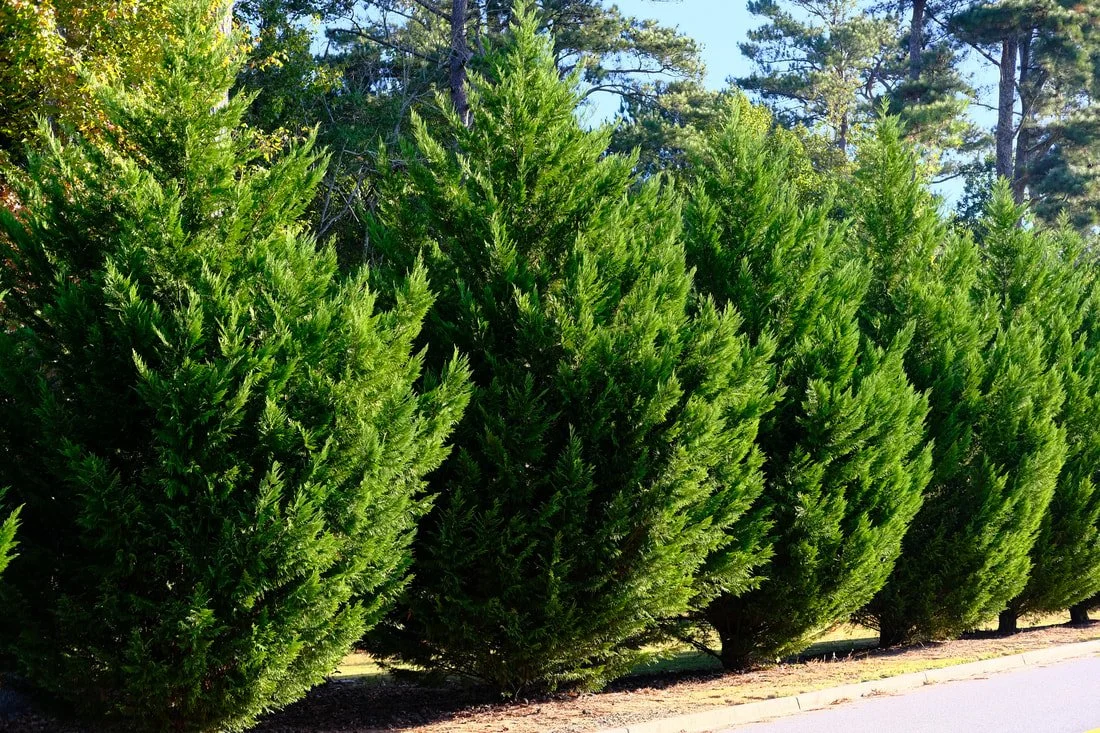
Leyland Cypresses are a beautiful evergreen tree, used widely both by professionals and homeowners to decorate landscapes and offer privacy. You’ve probably seen them in rows as a privacy fence in your neighborhood, or even at your local Christmas tree farm!
What Is a Leyland Cypress?
The Leyland Cypress (X Cupressocyparis leylandii) is a hybrid coniferous evergreen tree. A hybrid is a cross between two other species: in this case, the Nootka false cypress (Chamaecyparis nootkantensis) and the Monterey cypress (Cupressocyparis macrocarpa). As a hybrid, most Leyland Cypresses are sterile, which means they don’t produce seeds that can then grow into other trees. To propagate them, nurseries and other sellers and farmers must use cuttings.
Leylands grow in a pyramid- or cone-like shape, and can reach heights of 60 to 70 feet, with spreads between 15 to 25 feet. They’re fast growers, too, and on average, will add about 4 feet to their height and 2 to 3 feet to their width every year until they reach that full size. They usually live 15 to 20 years before naturally dying out.
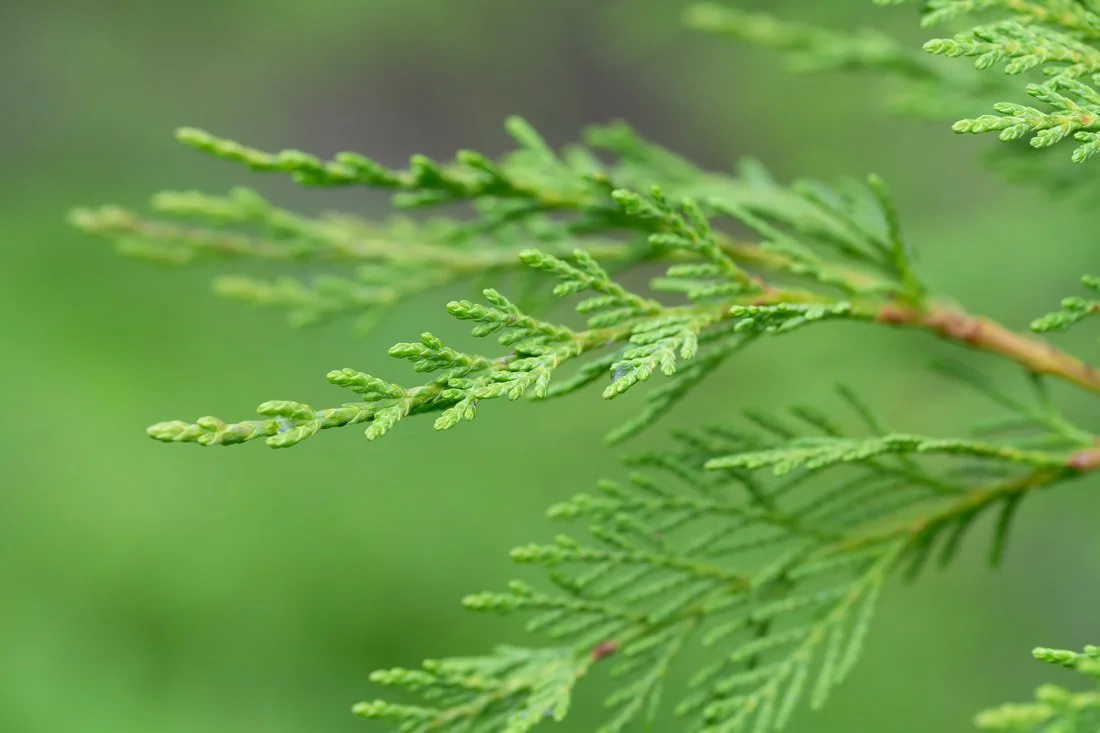
The leaves of the Leyland Cypress are more similar to needles than leaves, and grow in thin, short layers resembling scales. They range from a rich green to a darker blue-green depending on the cultivar. Their sterile seeds are found in small cones about 2 cm in length. These cones begin green, fade to brown with maturity, and eventually dry out, turning gray before they fall.
Leyland Cypress trees like full sun to thrive, which means they need 6 or more hours of direct sunlight a day. This makes them good candidates for creating borders where you otherwise have little to no trees, as they won’t have to worry about shade taking away from their sunlight hours.
What Makes Leyland Cypresses Popular?
Leyland Cypresses are a popular landscape choice largely due to their quick growth. These trees are relatively hardy, and require little up-front maintenance. You can plant a row of them and within a couple years have a fully-functional privacy fence or border. Their classic pyramid shape and rich green needles make them visually appealing and easy to incorporate into any landscape.
The classic shape and quick growth make them a popular choice of Christmas tree, especially for “choose and cut” farms that plant rows of trees and allow customers to come cut down their own. Most people want a tree that’s 5 to 8 feet tall, which means farmers only need a year or two of growth from a Leyland Cypress to have a sellable product.
Planting Considerations for Leyland Cypresses
When planting a Leyland Cypress (or a privacy fence of Leyland Cypresses), there are a few important things to keep in mind if you want a happy, healthy tree.
1. Growth Rate
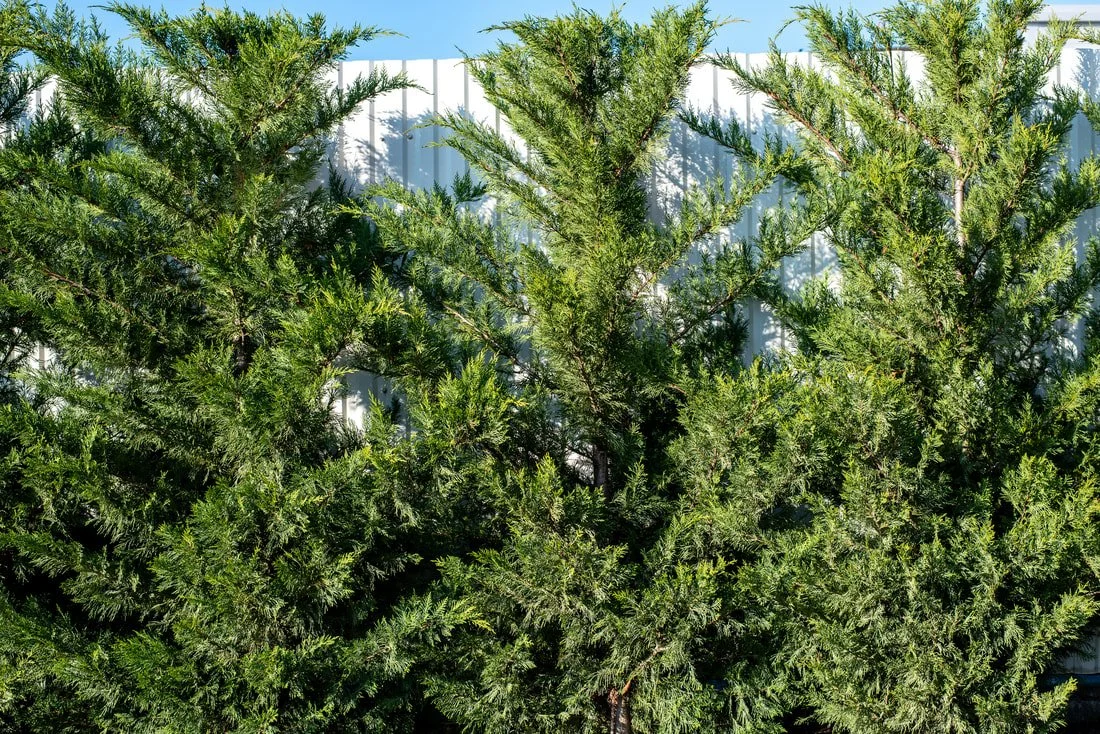
This might seem obvious, considering their quick growth rate is a major factor in why homeowners and landscapers choose to plant Leyland Cypresses in the first place. But it’s all-too-easy to underestimate just how much space a fully-grown Leyland will take up, which means it’s all-too-easy to plant it too close to something, whether that’s another Leyland in a row designed as a privacy fence, or your house or driveway. A Leyland too close to other trees will start competing for space, and the losers will suffer and may even die. A Leyland too close to structures might start growing branches over your roof, or digging roots into your foundation.
2. Depth
One of the most common mistakes we see with Leyland Cypresses is trees that were planted either too deep in the ground, or not deep enough. If the root collar is buried, the tree can suffocate. But if the root ball is too shallow, the tree won’t establish well, and might get blown over in a summer storm.
The best practice is to dig out a hole that is 3 to 4 times larger than the diameter of the root ball, and only as deep as the root ball is tall. When covering the root ball, make sure the root collar is exposed.
3. Soil Drainage
Leyland Cypresses are fairly hardy, but require well-drained soil to thrive. They don’t like wet feet! The easiest way to encourage drainage is to use some kind of ground cover, like mulch, to help control moisture levels.