What to Do In Winter Storms
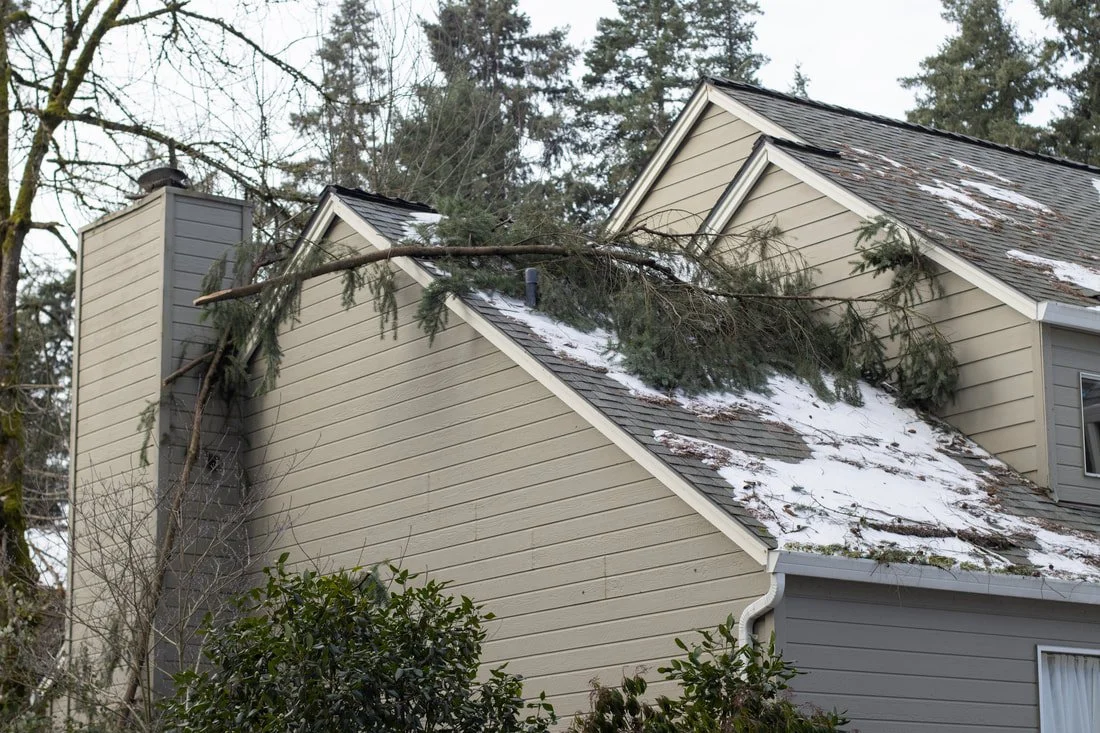
If the storm drops limbs on your roof, please don't try to climb up there yourself to get them down!
We aren’t exactly known for getting lots of winter precipitation here in Athens. The occasional snow flurry, and if we’re lucky, maybe a half-inch that sticks around for long enough to make a small snowman. But sometimes, Georgia’s fickle weather likes to catch us off-guard, and sends us things like freezing rain, sleet, snow, and even hail. Such events, though few and far between, can be incredibly dangerous for a multitude of reasons, including the increased likelihood of tree failure.
What happens if a tree fails in a winter storm?
The first thing to do in any tree failure or partial tree failure situation is to get to safety. If a tree falls on your home, evacuate that area. If it falls on your car, keep a safe distance. If anyone is hurt, call 911 immediately.
Once everyone is a safe distance away from the impact zone, it’s time to assess the situation to determine how severe the emergency is. The following are some of the criteria that both emergency responders and local tree service companies consider emergencies that should be prioritized:
Someone is in danger.
For example, if a tree fell onto your car while someone was in it, or fell into their bedroom, trapping them inside.
Access for emergency medical attention is blocked.
For example, a tree fell across your driveway, and an ambulance wouldn’t be able to get to your home if needed.
Power lines are involved.
If a falling tree or limb impacted power lines, call 911 to alert them so the lines can be inspected, and ALWAYS assume the lines are still active and capable of electrocuting you.

If a tree falls on powerlines, you should keep your distance, as the lines are still active and can electrocute you.
Further danger is expected.
For example, if a tree has started to fail but hasn’t fully fallen, say because it gets caught in another tree. Or, if a tree loses a limb and starts cracking down the trunk, suggesting it might fail entirely.
If you meet any of the above criteria, first call 911 to alert them of the situation, and then a tree service company.
If your situation doesn’t meet the above criteria or isn’t an emergency, you can still call a tree care professional to get your job on their radar. Just know that, while your project will likely take priority as storm-related over regular work, there may be other emergency situations that take precedence. Be patient and know that all the tree companies in your area are doing the best they can to get to every job in a timely manner while keeping their community and employees safe.
What tree company should I use?
There are plenty of tree service companies local to our area, and during severe storms when there is lots of emergency work, we all work together to make sure everyone’s trees are taken care of as quickly as possible to minimize damage and danger to persons and property.
That said, there area few things you should confirm before allowing any tree service professional to step on your property:
Liability Insurance
Make sure the company you choose maintains liability insurance, and make sure that insurance is up to date. Any reputable company will be more than happy to provide you with a copy of their insurance for your records, which will include both the monetary amount their insurance covers up to, as well as the dates the insurance is valid for.
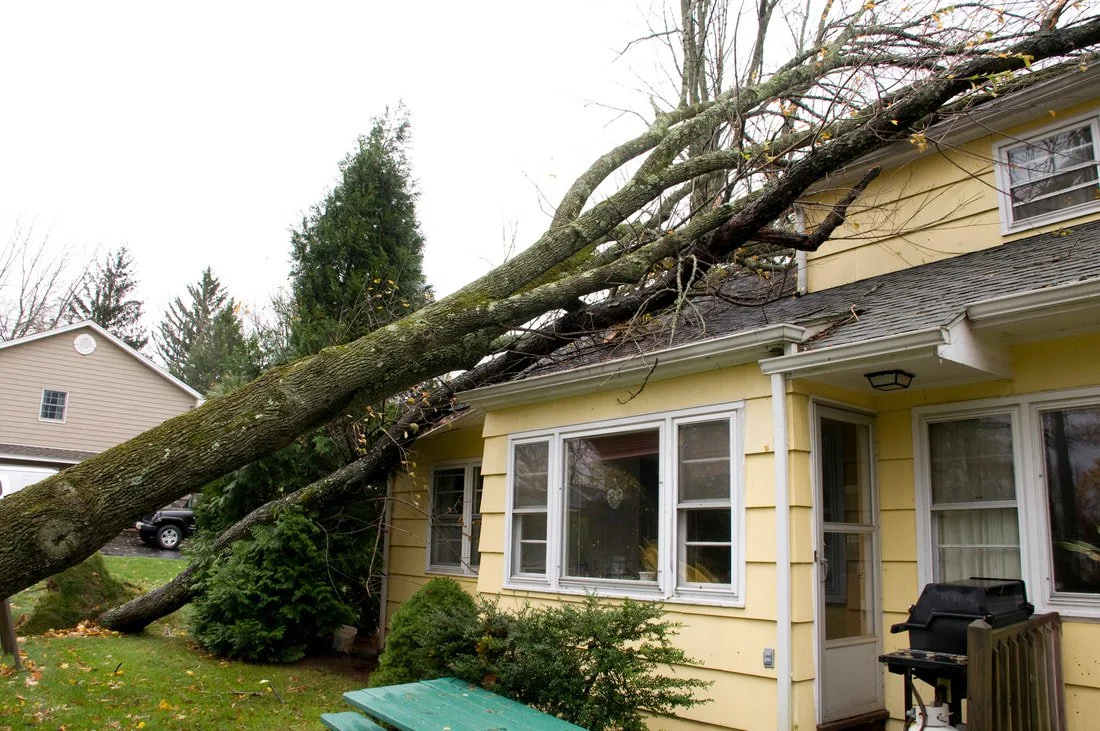
If a tree falls on your house, get out safely, call your insurance agent, then call a Certified Arborist.
Worker’s Compensation Insurance
You also want to ensure the company has up-to-date worker’s comp. If one of their employees gets injured on the job, this kind of insurance ensures you aren’t liable for their medical care. Again, any reputable company will provide you with a copy of this insurance for your records.
Arborist Certification
It’s always best to have a Certified Arborist assess your situation. They’re trained and experienced in emergency situations, and will know how best to remove the fallen tree as safely as possible, while also minimizing further damage to your home and property.
How can I prepare for a storm?
While there’s not much you can do in the way of preparing your trees for a storm (you can’t cover them with a tarp or park them in the garage, like you can with your car, for example), there are still some things you can do to be prepared.
Park cars away from high-risk trees.
Broadleaf and needleleaf evergreens are more susceptible to damage and failure during freezing rain and ice accumulation. If you’ve got some tall pines near your driveway, you might want to consider parking your car in your front yard, or even on the street. If you’ll be parking on hardscape, like concrete or pavement, avoid parking on steep inclines.
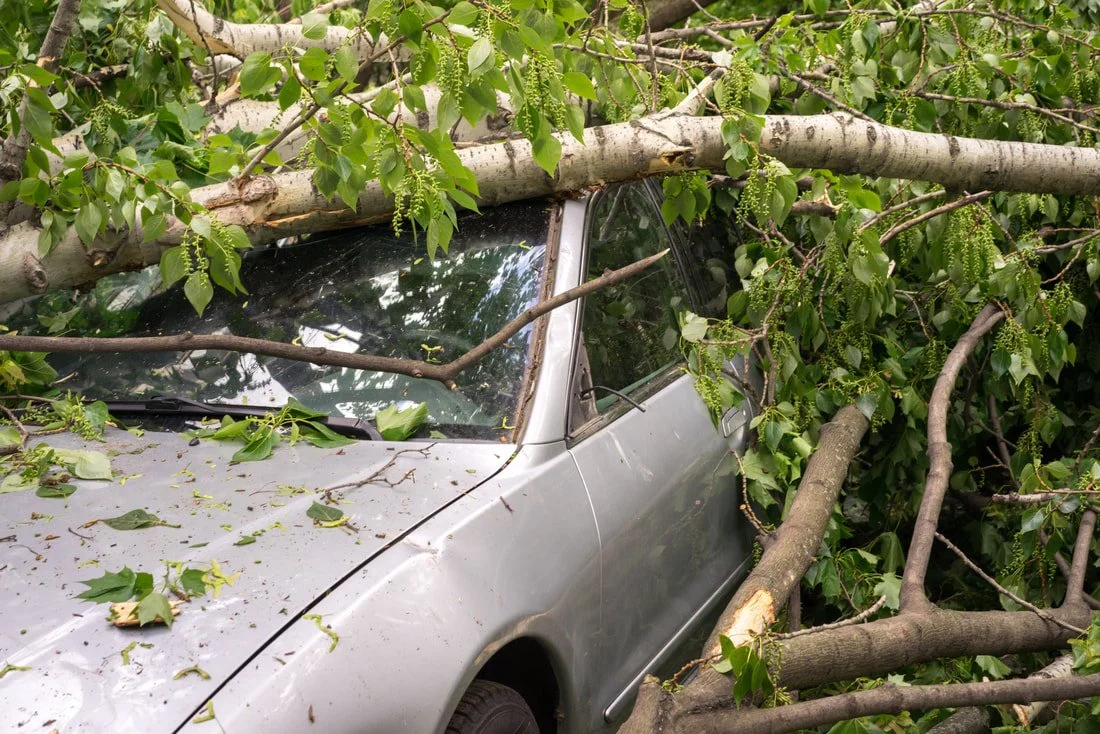
Park any vehicles away from high-risk trees before a storm to prevent a tree from falling on your car.
Bring decorations inside.
High winds can cause even heavy patio furniture to blow away, or worse – to crash into a window. If you can, bring loose items like this inside, or put them in a shed. If you can’t do that, consider tying them down.
Get a secure water supply.
Severe storms in our area tend to knock out the power, sometimes even for a few days, so it’s important to make sure you have access to fresh water. Fill a bathtub (or two, if you have them!) with water. This can be used to refill toilet tanks for flushing, brushing your teeth, or even for drinking. Having a case of bottled water on hand is also a smart idea. Remember, adults need 2-3 liters of water a day, and children need 1 liter per day, so keep that in mind as you plan ahead. And don’t forget pets!
Keep warm.
With freezing temperatures, things can get very cold very quickly, so it’s important to know how you’re going to stay warm in the event of a power outage. It’s easiest to keep one room at a safe temperature, rather than trying to keep an entire house warm without central heating. If you have a fireplace, stock up on firewood and pull out the sleeping bags – it might be time to have a sleepover in the living room! If you don’t have a fireplace, a small camp stove or gas grill can also generate heat. If you don’t have anything that can generate heat, gather everyone into one of the smallest rooms of the house. Bundle up with lots of layers and blankets, and use extras to cover windows for added insulation. Your combined generated body heat can help keep a smaller room warm.
Keep an eye on your perishables.
If the power goes out, try to open your fridge and freezer as little as possible to hold in the cold air. Fridges can keep meat, dairy, and eggs safe for about 4 hours if the door remains closed, so eat those items first if possible. Your freezer, on the other hand, can keep things safe to eat for a day, maybe even two, if the door stays shut and the freezer is full.
Stock up on non-perishables.
If you know in advance a storm is on the way, stocking up on non-perishable foods is always a smart move, especially foods that don’t need any kind of cooking. Crackers, bread, peanut butter, beef jerky, and canned fruits are all great options.
In the event of tree damage in a winter storm, Classic City Arborists prioritizes emergency work, so don’t hesitate to give us a call! If you’d like to have us check out your property for any high-risk trees, consider scheduling a tree assessment.