Shagbark Hickory
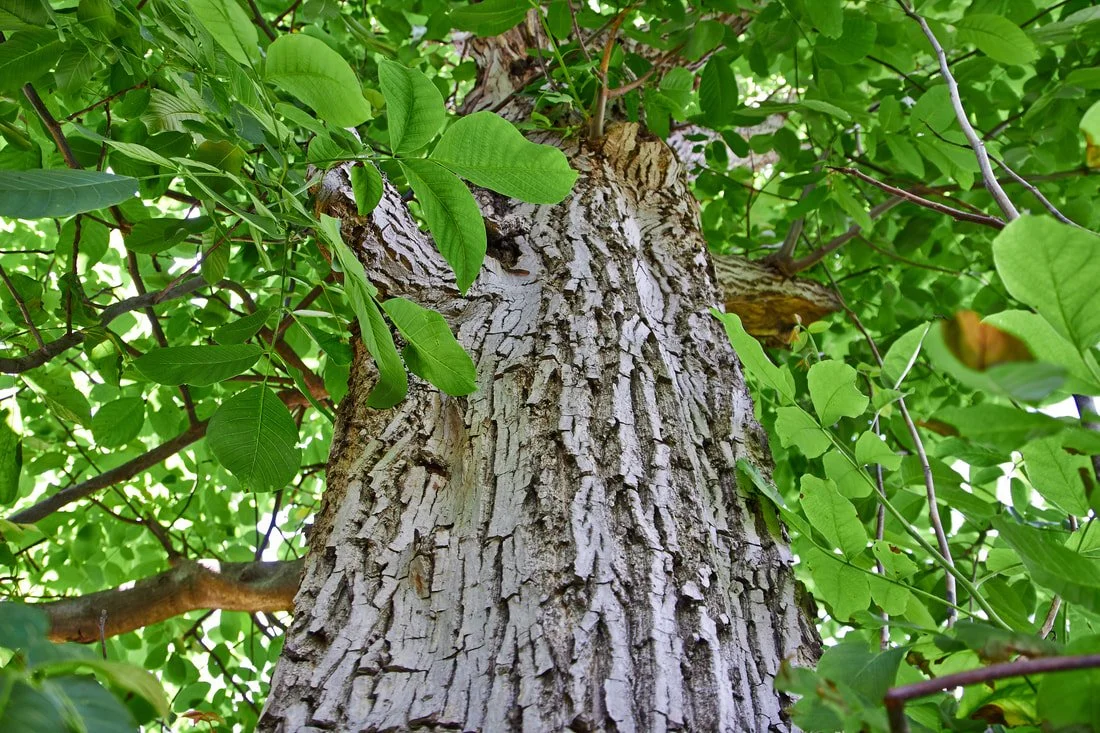
If you’ve lived in the southeast, you’ve definitely seen a few hickory trees in your time. In Georgia, the most common hickory is the Carya ovata, more commonly known as the shagbark. Other names include shellbark hickory, scalybark hickory, and upland hickory.
The word ‘hickory’ comes from an Algonquian language, a shortened version of powcohiccora, which was likely the name of the tree’s nut, or possibly a milky drink made from the nuts. The colloquial “shagbark” part of their name comes from their most striking visual aspect: the loosely-plated bark that peels away in large plates, giving their trunks and branches an overall ‘shaggy’ appearance.
Did You Know? President Andrew Jackson was nicknamed “Old Hickory,” because he was ‘tough as a hickory tree!’
The shagbark hickory is a medium-sized deciduous tree, reaching average heights of 70 to 80 feet. Their crowns mature into an oval shape and can spread 40 to 70 feet. Though native and populous throughout eastern North America, they rarely grow in stands, and instead are often found scattered throughout forests surrounded by other species.
Visually, their most distinctive feature is of course their ‘shaggy’ bark. Only mature trees exhibit this trait, however; younger shagbarks actually have smooth trunks, making them difficult to identify as shagbarks from a distance.
Shagbarks are also striking for their large leaves, which average 12 to 24 inches long. They grow in 5-leaflet clusters and are lightly serrated along the edges, with a vibrant green color in the spring that fades to golden in the fall.
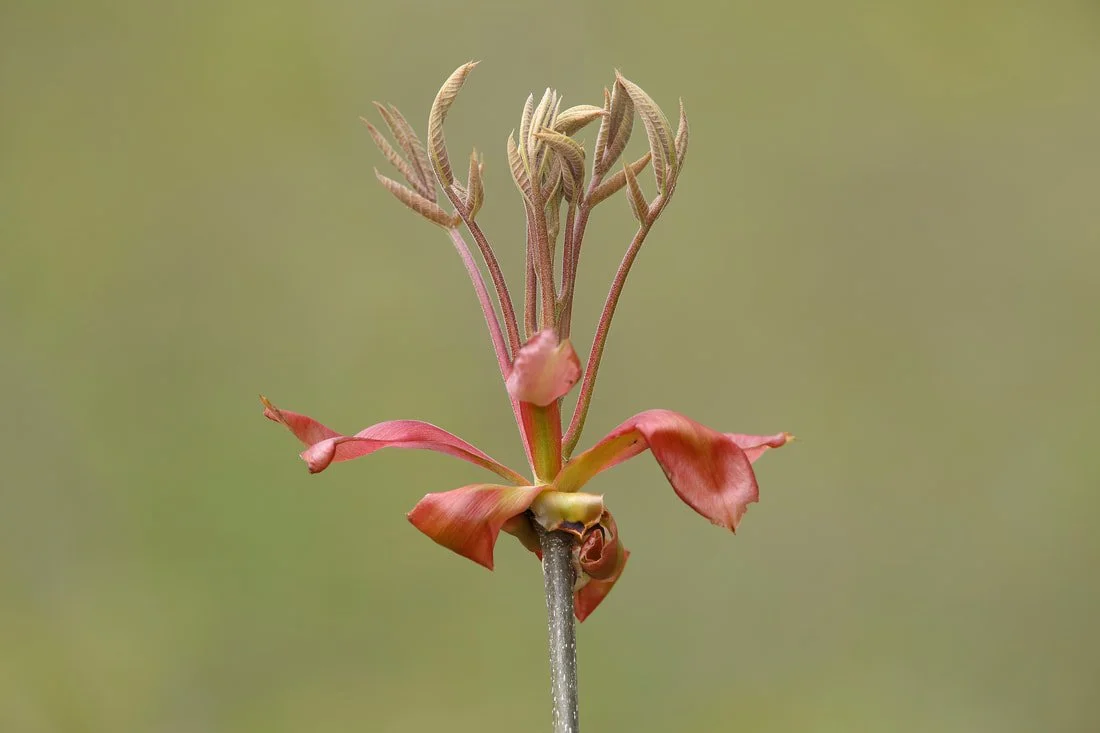
Shagbark hickories are monoecious, with their male and female flowers growing jointly from the tips of old wood or axils of the previous season’s leaves. The female flowers are shiny and muted red in color, and each petal averaging 4 to 6 inches long. The male flowers are small green spikes that appear to grow from the female flower. They bloom in the spring, usually around late-March here in Georgia.
The product of successful blooms is a thick-husked drupe with four sections that conceals a hard-shelled nut. Hickory trees are members of the walnut family, and their nuts are largely edible and enjoyable. Shagbark hickories are no exception; their nuts were once a staple in Native American diets, and continue to be appreciated by humans and animals alike. They support a wide range of species, including squirrels, raccoons, chipmunks, mice, bears, foxes, rabbits, and some bird and turkey species. For humans, shagbark nuts are culinarily similar to pecans, and are often used as substitutes for pecans in colder climates.
Did You Know? The largest shagbark hickory tree can be found in Savage Gulf, Tennessee, measuring in at over 150 feet tall!
These trees are incredibly long-lived, with average lifespans ranging from 200 to 300 years, and they can produce fruit starting at around 40 years, making them a reliable food source. Despite this, they aren’t often used commercially, as the 40-year investment before nut production makes them prohibitive to most agricultural ventures. Their fruit output from year to year is also inconsistent, depending heavily on environmental factors, making them a temperamental crop.
In addition to their nuts, shagbarks are also valued for their wood, which is used both for lumbar due to its heavy, hardy nature, and for smoking meat thanks to its light natural sweetness.
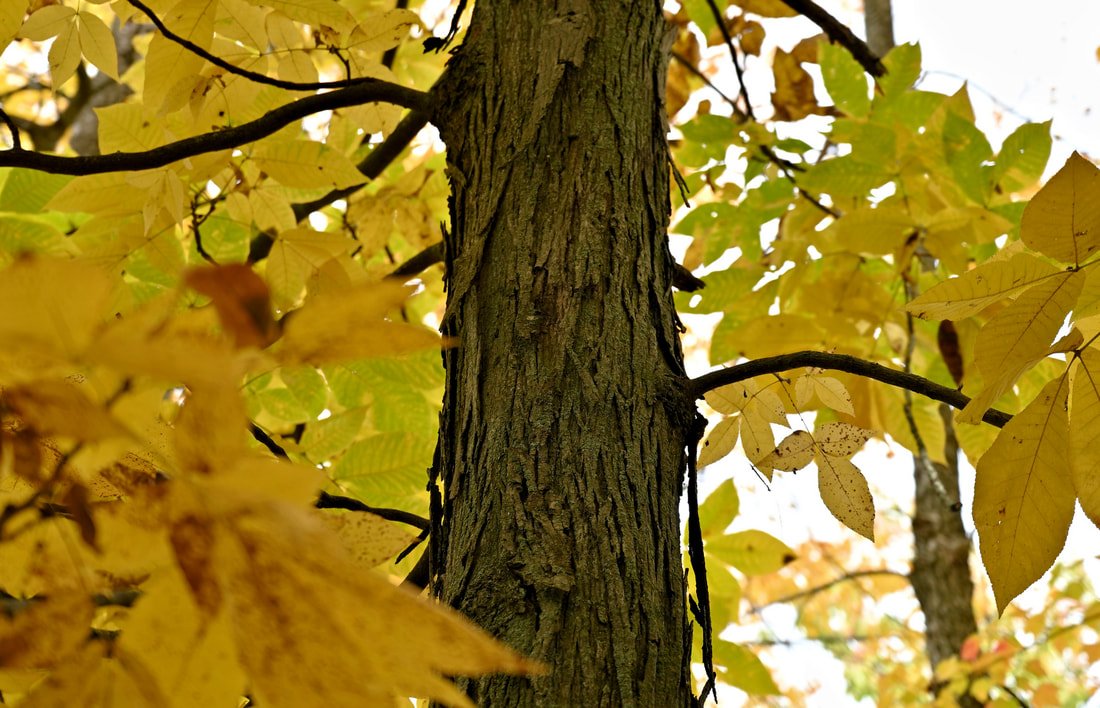
Though they’re ecologically important and visually interesting, shagbarks aren’t often used in landscaping, be it personal or commercial. Their slow growth rate is a disadvantage, and the litter associated with their drupes and subsequent nuts can be both an eyesore and a hazard. The amount of wildlife they attract can also cause problems when located near areas with high foot traffic.
Though you probably won’t see one bordering a manicured lawn or along the sidewalk in the park, these trees are still widespread in our area, so keep your eyes peeled for peeling bark!