The Great Southeast Pollinator Census
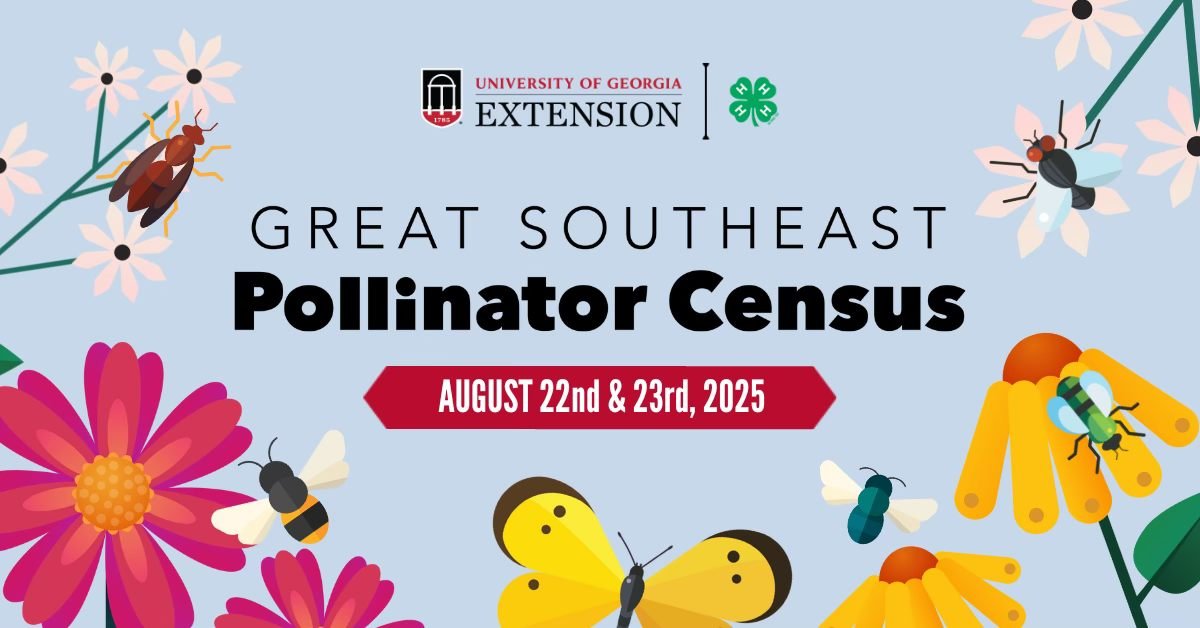
This August, the 22nd and 23rd to be exact, is the Great Southeast Pollinator Census, organized by our very own University of Georgia!
What is the Great Southeast Pollinator Census?
Once a year, the University of Georgia’s College of Agricultural and Environmental Sciences organizes the Great Southeast Pollinator Census, or GSePC for short. This project catalogues the pollinator population in the southeast by recording the frequency with which different pollinators visit pollen-bearing plants.
Why is that important?
Pollinators are, of course, vital to their ecosystems, but they are also vital to our way of life. There are more than 180,000 plant species that pollinators visit to assist with their reproductive process. 1,200 of those species are major crops that sustain our society! To put that in perspective, think of it this way: approximately 1 out of every 3 bites of food you take is thanks to pollinators.
In addition to supporting our food supply, pollinators also ensure the continuation of all life on earth. That may sound drastic, but without pollinators assisting them, somewhere between 75% to 95% of all plant life wouldn’t be able to reproduce, which means their species would die out. Plants produce the oxygen we breathe and help keep the air clean. No plants means no oxygen, and no oxygen means no humans!
How Does It Work?
The GSePC has a detailed guide on how to participate, with pictures, descriptions, and helpful tips. You can also check out their video guide on YouTube for a walk-through of the process, or their FAQ page for more information.
Basically, you'll just need to print out the official Great Southeast Pollinator Census worksheet. As you can see below, the worksheet breaks up pollinators into a few different categories: Carpenter Bees, Bumble Bees, Honey Bees, Small Bees, Wasps, Flies, Butterflies & Moths, and Other Insects.
On August 22nd or 23rd (or both, if you want to participate more than once!), go outside and sit in view of a pollinator plant. It can be your favorite flowering bush in your garden, a cluster of wildflowers on the sidewalk, or something found at the local park.
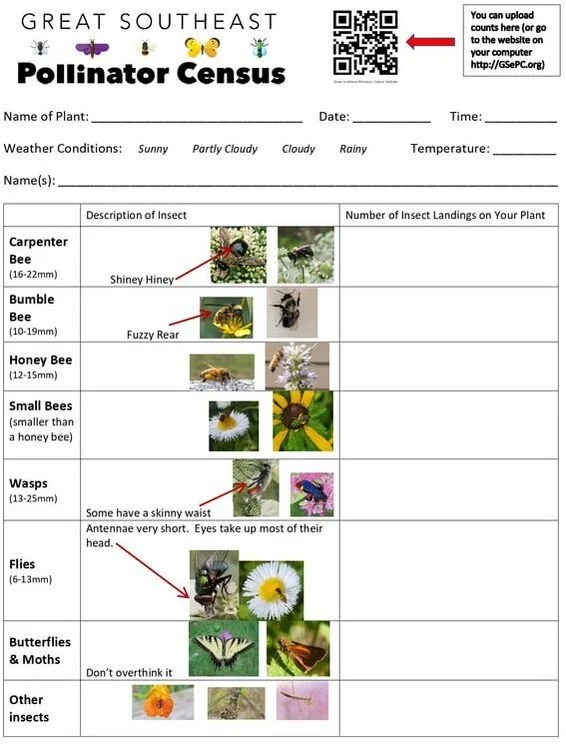
For 15 minutes, keep track of how many pollinators land on your plant, and tally them in their category. After your 15 minutes are up, submit your tally numbers for each category to the Great Southeast Pollinator Census’s website.
And that's it!
Who Can Participate?
Anyone can participate in the Great Southeast Pollinator Census. You don’t have to be an entomologist (someone who studies bugs) to help out!
The GSePC especially encourages kids of all ages to join in, with parental supervision, of course. This project is a great way to get kids outdoors and engaged with the natural world around them. It also makes for a great introductory STEAM exercise, and is perfect for class activities as well as at-home adventuring.
If you're interested in using the GSePC in your classroom, check out all the great educational materials and lesson plans the GSePC website has to offer!
More Ways to Contribute
Even if you can't participate in the census this year, there are still plenty of ways to help out! For one, you can join the GSePC Facebook page, or follow them on Instagram @SoutheastPollinators, and help promote the census by sharing about it on social media.
Another great way to help out is to do what you can for pollinators near you. Check out our article on what to plant to attract pollinators so you can support their population, and enjoy some pretty flowers to boot!