|
News and Blog Articles
|
|
News and Blog Articles
|
|
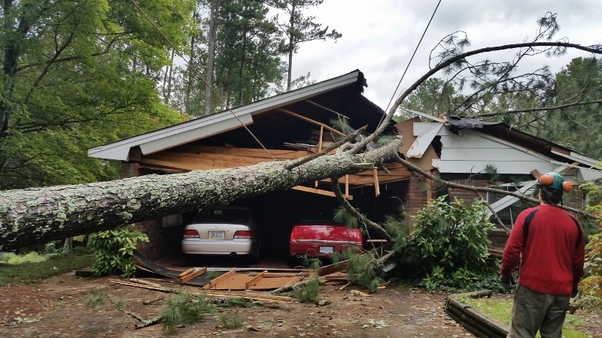
We’ve had our April showers, we’ve enjoyed our May flowers, and now we’re moving into the hottest months of the year. Here in Georgia, that means summer storms. We’re well on our way to everything from gentle rainy afternoons to angry days with lightning strikes and lashing winds. Unfortunately, the latter often leads to broken branches and falling trees, causing damage to your yard, your fence, or even your home. The Danger of Summer StormsInclement weather always presents a risk, especially when compromised trees are involved. One wrong gust of wind, and that partially-dead pine is suddenly partially in your living room. But summer storms come with some unique factors that you don’t see in the winter. An obvious difference in summer storms, though one you might not have considered, is the presence of leaves. While winter storms often blow through bare branches, in the summer, those branches are covered in new growth. And while leaves are, of course, vital to a tree’s survival, they also weigh quite a bit. The added weight puts extra stress on any weak areas, making them more prone to breakage when the weather gets rough. Dense foliage also presents a problem when it comes to identifying issues. It can be hard to look for signs of decay when you can’t see the bark of your tree for all the leaves. Lush greenery can disguise problem areas, and can also mislead you into thinking your tree is perfectly fine, just because its leaves are green and full. Another concern with summer storms is that they come during high pest and insect activity. In the winter, most creepy crawlies are dormant, but in the summer, they’re hungry and looking for trees to infest. Some pests are easy to spot when they invade, whether because you can see them on the tree, or you can see the dead leaves and holes they leave behind, but some pests leave little to no trace, doing most of their damage on the inside. Either way, this leads to compromised health and can spell a fall during a summer storm. Lastly, summer storms have a higher risk of causing personal injury. While we tend to stay inside during the cold months, keeping warm by the fire and spending the holidays with friends and family, in the summer, most activities are enjoyed outside. Whether it’s lounging by the pool, jumping on the trampoline, or playing a game of catch, more people spending more time outside means more chances for a broken limb or falling tree to hit someone. Now, you’re probably not outside participating in such activities during the actual storm. But damage from a summer storm might not lead to tree failure or a falling branch right away. That failure or fall might occur hours, days, or even weeks later – during perfectly amicable weather that encourages outdoor time. What to Do to Prepare for Summer StormsWhile the risks of summer storms will always be present – even the healthiest of trees can be taken down by inclement weather – to help mitigate that risk, it’s always best practice to take a look at the trees on your property as the days start to warm. First, keep your eyes out for signs of decay on what parts of the tree trunk and branches you can see. Holes or burrows from pests, large cankers, visible rot, flaking bark, all of these can be signs of serious problems in your tree. Also keep your eyes on the leaves for dead sections, discoloration and diseased spots, holes or rough edges from insects feeding, or sparse areas where the leaves aren’t growing. And check for any significant lean; trees growing at an angle rather than mostly straight up-and-down might be structurally unsound. Second, take a look at all the trees with problematic target areas. A tree’s target area is the space around the tree where a falling limb could land, or where the tree itself could land if it fell. A problematic target area might be a high-traffic area, like your backyard where the kids play, or it might be a structured area, like your home or garage. It’s important to note trees with problematic target areas even if they look perfectly healthy, because again, even the healthiest tree can fail during inclement weather. After you’ve noted any trees of concern for both of these categories, it’s time to have a Certified Arborist take a look. Most arborists offer free estimates, which means they’ll evaluate the trees you’re worried about at no cost. They can tell you what the options are for mitigation, whether it’s some pruning, a pesticide, or fully removing the tree. At Classic City Arborists, we offer free estimates with our Certified Arborist and co-owner, Scott Rushing. If you’re in the Athens, Georgia area, call us today to schedule your appointment and have your trees looked at before the summer storms set in! AuthorEmily Casuccio is sister and sister-in-law to Rebekah and Scott Rushing, and has worked with Classic City Arborists for the last 5 years. In addition to handling administrative tasks and customer communication (she’s the voice you’ll hear on the phone!), Emily is an experienced copywriter, editor, and storyboard consultant. To learn more about her, read samples of her work, or contact her, visit her online portfolio.
1 Comment
|
Categories
All
Archives
April 2025
|
|